
Borders Within the Family
Winter in SokchoThis flow traces the boundaries the narrator negotiates with her mother, Jun-oh, and the men who seek to define her future.
increasing Bearing strength in each event
 decreasing
Bearing strength in each eventdecreasingA Father’s Absence
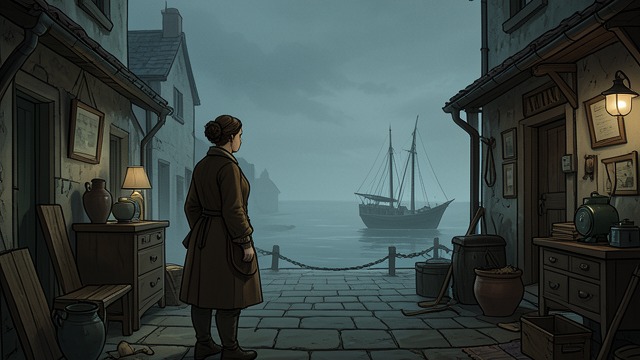
A Father’s Absence
A history without return
The narrator’s French father seduced her mother and disappeared before the story begins. His absence remains part of the gossip surrounding the narrator at the Sokcho Fish Market.
The narrator knows little about him beyond his work as a fishing engineer.
Inheritance as a boundary
The absent father connects her to France while leaving her rooted in her mother’s town. Her identity is shaped by a relationship that exists chiefly as a gap.
A Language from Her Mother

A Language from Her Mother
Studying French
The narrator tells Yan Kerrand that she studied French so she could speak a language her mother would not understand. The admission surprises him, and he makes no comment.
The language was not only a bridge to her father’s country but a way to create privacy.
Separation inside closeness
The narrator and her mother share a life and a home history, yet she has sought a language that could mark a boundary between them. The choice exposes the tension between attachment and independence.
Sunday Bedtime Refusal
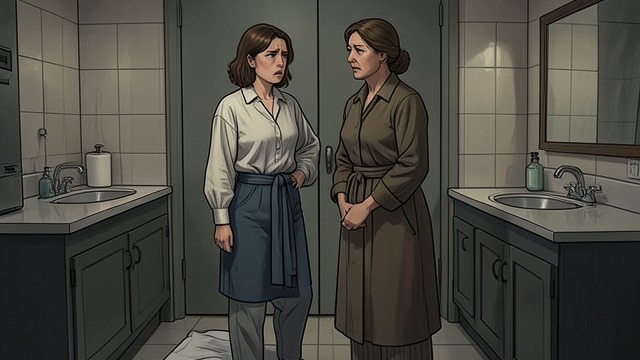
Sunday Bedtime Refusal
A boundary named
The narrator tells her mother she cannot go home with her after their bathhouse visit. She has work to do, but also admits internally that she cannot bear sharing a bed anymore.
Her mother looks hurt, and the narrator finds that hurt difficult to witness.
Independence with guilt
The narrator keeps her decision despite the emotional cost. The scene shows how even a small boundary can feel like betrayal when affection has been organized around dependence.
The Move Rejected
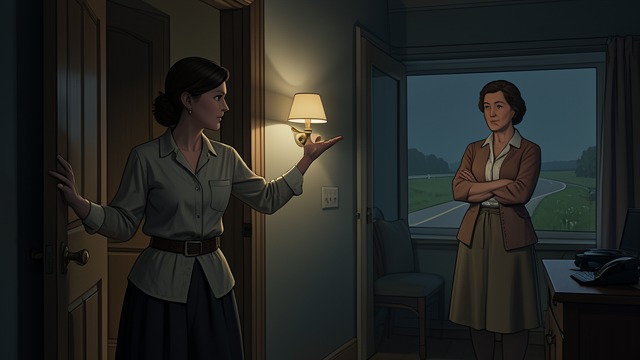
The Move Rejected
A proposed household
Jun-oh asks the narrator to move to Seoul and suggests that her mother could move with them. The narrator refuses both the relocation and the idea of living with her mother there.
She cannot abandon her mother, but does not want a shared household in the capital.
Two boundaries at once
Her answer protects her present life while exposing its contradictions. She is unwilling to leave her mother, yet also needs distance from the closeness that has defined their relationship.
An Unanswered Goodbye

An Unanswered Goodbye
Wanting recognition
The narrator admits she wants Yan Kerrand to see and draw her, not merely use her as a guide to Sokcho. She also insists that her desire is not simply love or a plan for a future together.
His impending departure makes the distinction painful.
A boundary without closure
She cannot make him stay or compel him to understand what she wanted. The relationship ends with her newly articulated desire and no assurance that it has been received.
Before the story begins, recalled at the fish market
During the mountain conversation
During the cold spell
On Jun-oh’s return from Seoul
After Yan Kerrand announces his departure
